

National Pediatric Cancer Surveillance Conference Highlights Data-Driven Advances in Childhood Cancer Care in China
Browse times:
Leading policymakers, clinicians, researchers, and international experts gathered in Beijing to discuss advances in pediatric cancer surveillance, multidisciplinary care, survivorship research, and long-term disease management.
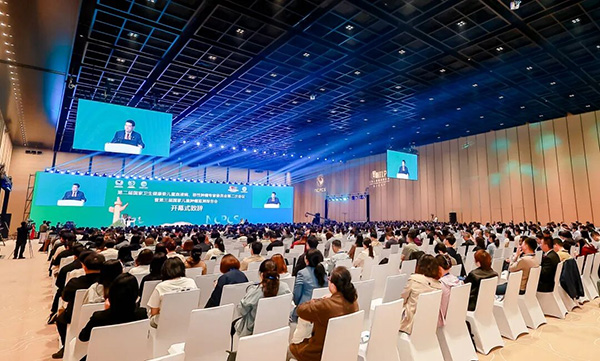
From April 25 to 26, the Second Meeting of the Second National Health Commission Expert Committee on Pediatric Hematologic Diseases and Malignancies and the Third National Pediatric Cancer Surveillance Report Conference was held at the China National Convention Center in Beijing. The conference was organized by the National Center for Children’s Health, Beijing Children’s Hospital, Capital Medical University, and the National Center for Pediatric Cancer Surveillance, with support from the Beijing Children’s Health Foundation and the Beijing Jikang Public Welfare Foundation.
Under the guidance of the Department of Medical Administration of China’s National Health Commission, the conference brought together representatives from national and municipal health authorities, international organizations, academicians, and leading experts from China and abroad. More than 1,000 representatives from across China attended the conference, including members of the National Health Commission Expert Committee on Pediatric Hematologic Diseases and Malignancies, staff from national pediatric cancer surveillance sites, and representatives from designated pediatric hematology and oncology institutions nationwide.
Distinguished participants included representatives from the National Health Commission, the Beijing Municipal Health Commission, and the World Health Organization China Office; academicians from the Chinese Academy of Sciences and the Chinese Academy of Engineering; as well as experts and scholars from institutions across China and overseas, including St. Jude Children’s Research Hospital, the World Association of Chinese Doctors, and the Faculty of Medicine of Macau University of Science and Technology.
In his opening remarks, Xin Ni, Director of the National Center for Pediatric Cancer Surveillance and President of Beijing Children’s Hospital, Capital Medical University, emphasized the critical role of surveillance data in advancing early prevention, early diagnosis, and early treatment of childhood cancer. During the conference, the National Pediatric Cancer Surveillance Annual Report (2024) was officially released, incorporating updated national data including 5-year survival outcomes and providing important evidence to support policy development, clinical research, and pediatric cancer prevention and control efforts in China.
Speakers from national health authorities and international organizations emphasized the importance of strengthening pediatric healthcare systems, expanding pediatric service capacity, improving quality and safety management, enhancing access to medicines and new technologies, and advancing child-centered comprehensive care. They also highlighted the value of surveillance data, international collaboration, psychological support, and integrated medical, rehabilitation, and community support systems for children affected by major diseases. Representatives from international organizations, including the World Health Organization China Office, noted China’s sustained commitment and implementation capacity in childhood cancer prevention and control, including the potential value of its experience for other developing countries.
A major highlight of the conference was the release of the National Pediatric Cancer Surveillance Annual Report (2024), the third in the biennial series. The report presents updated national data on pediatric cancer hospitalization characteristics, healthcare utilization patterns, epidemiological trends, and 5-year survival outcomes for newly diagnosed cases from 2018–2019.
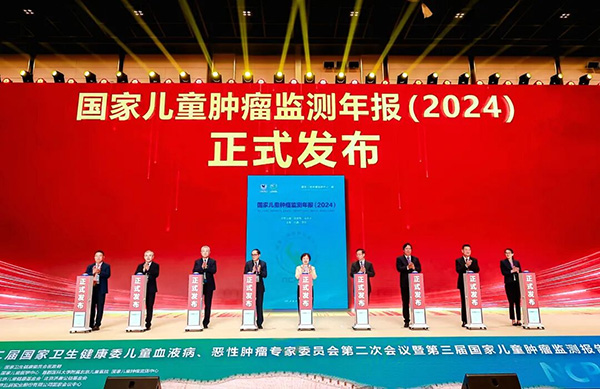
During his interpretation of the report, Xin Ni introduced the latest progress in China’s national pediatric cancer surveillance system. Since 2021, the number of surveillance sites has expanded from 425 to 1,764 institutions, covering all 31 provincial-level administrative regions in China. To date, the national database has accumulated approximately 8.047 million case report records, while around 410,000 pediatric malignancy patients have been included in full-course longitudinal follow-up and management. He also reviewed key progress achieved during China’s 14th Five-Year Plan period and outlined future priorities for the surveillance system during the 15th Five-Year Plan period. Experts at the conference noted that the report reflects China’s continued transition toward more data-driven and precision-oriented pediatric cancer prevention and control approaches, emphasizing the importance of leveraging surveillance data to strengthen scientific research, clinical translation, and targeted interventions aimed at improving outcomes and reducing disparities in pediatric oncology care.
The conference also marked the launch of the China Childhood and Adolescent Cancer Familial Cohort and Survivorship Cohort study. The survivorship cohort aims to provide long-term follow-up for children and adolescents after cancer diagnosis, focusing on physical health, psychological well-being, education, social adaptation, and family burden, while the familial cohort seeks to explore genetic susceptibility mechanisms and familial aggregation patterns to support the future development of genetic counseling systems and familial cancer screening strategies in China.

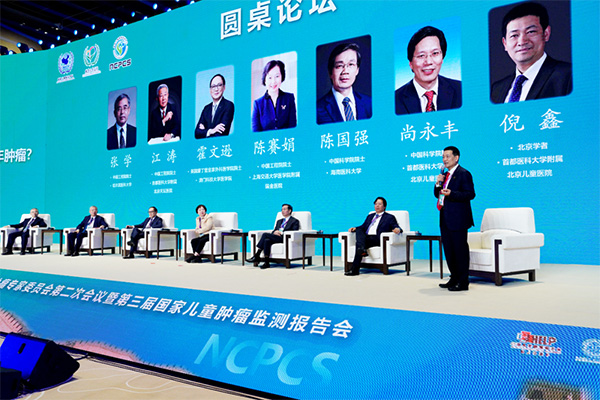
An academic roundtable chaired by Xin Ni brought together leading academicians and experts to discuss key issues in childhood and adolescent cancer prevention and control, including translational research, precision medicine, public health strategies, quality of survival, and equitable access to medical resources.
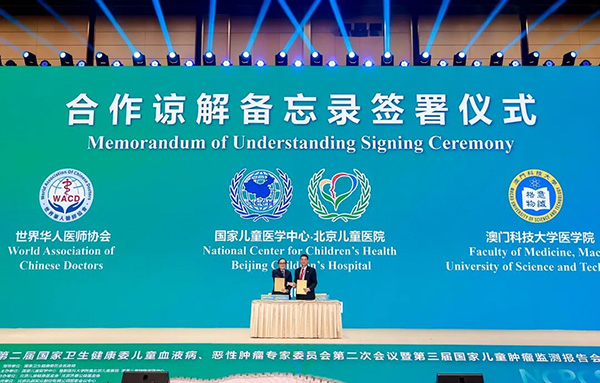
During the conference, representatives from the World Association of Chinese Doctors, the Faculty of Medicine of Macau University of Science and Technology, and the National Center for Children’s Health / Beijing Children’s Hospital signed a memorandum of understanding to strengthen collaboration in children’s health, with pediatric cancer surveillance network development identified as an important area of cooperation.
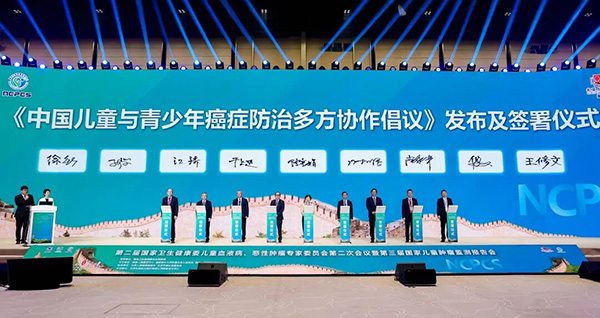
The conference also witnessed the launch of the China Multi-Stakeholder Initiative for Childhood and Adolescent Cancer Prevention and Control, described as China’s first comprehensive multi-stakeholder initiative focused on childhood and adolescent cancer prevention and control. The initiative introduced the “SEED-ALL” action framework, promoting early diagnosis and treatment, evidence-driven approaches, equitable access to care, whole-course patient support, multi-sector collaboration, diversified investment, and coordinated implementation. Additional initiatives aimed at strengthening long-term support and protection systems for children and adolescents affected by major diseases were also introduced, including efforts to improve coordination among basic medical insurance, commercial insurance, and public welfare support mechanisms.
The conference also established the first Committee on Data Application for Major Diseases in Children and Adolescents under the National Center for Pediatric Cancer Surveillance to strengthen national capacity in pediatric disease data application, research collaboration, and talent development.
Keynote presentations and parallel academic forums addressed innovative cancer therapy, clinical and translational research, survivorship research, the global burden of childhood and adolescent cancer, pediatric hematologic diseases, hematologic malignancies, and multidisciplinary management of malignant solid tumors in children and adolescents. Discussions also explored broader themes including multidisciplinary and integrative approaches to care, precision medicine, immunotherapy, innovative pediatric oncology research driven by clinical questions, and long-term survivorship management.
Experts from leading institutions in China and overseas shared the latest developments in risk prediction, epidemiological research, and multidisciplinary treatment strategies, contributing important perspectives to ongoing global efforts to improve outcomes and quality of life for children and adolescents affected by cancer.
From the release of major national surveillance data to the launch of survivorship cohort studies, expanded multidisciplinary collaboration, strengthened academic exchange, and the establishment of new national initiatives and professional platforms, the conference demonstrated China’s continued efforts to advance pediatric cancer surveillance, prevention, treatment, and long-term care through data-driven and multidisciplinary approaches.
Building on progress achieved during China’s 14th Five-Year Plan period, the National Center for Pediatric Cancer Surveillance will continue working with surveillance institutions, medical centers, research organizations, and social partners across the country during the 15th Five-Year Plan period to further expand national coverage and strengthen full-course patient tracking.
Future efforts will focus on deepening data application and full-chain innovation, supporting policy development, clinical research and resource optimization, and enhancing international exchange and contributing to global efforts in pediatric cancer surveillance and control.
Publicity Center and National Center for Pediatric Cancer Surveillance
Previous: New Standard Advances Integrated Care Model for Childhood Obesity Management
Next: Beijing Children’s Hospital Experts Participate in Medical Mission to Cambodia
-
 KK Women's and Children's Hospital
-
 Meyer - Azienda Ospedaliero Universitaria
-
 Sickkids - hospital
-
 Wolfson Children's Hospital
-
 St. Jude Children's Research Hospital
-
 Children’s National Health System – Ranked top ten Best Children’s Hospitals
-
 Children's Hospital of Los Angeles
-
 Dana-Farber Cancer Institute - Cancer Treatment and Research in Boston, MA
-
 Boston Children's Hospital
-
 Fakultní nemocnice v Motole
-
 ФГБНУ “ИЭМ”
-
 Федеральное государственное автономное учреждение
-
 Pasteur
-
 Morgan Stanley Children's Hospital

Add: 56 South Lishi Road, Xicheng District Beijing
Zip code: 100045
Tel: +8610 59612345
Fax: +8610 59718700