

China's First AI Pediatrician Expands Access to Specialist Pediatric Care
Browse times:
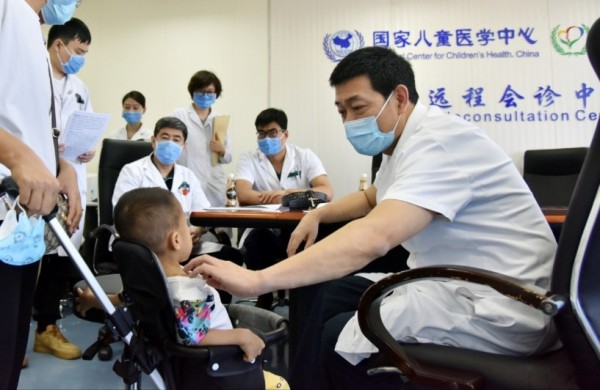
Around a conference table in the multidisciplinary consultation (MDT) center at Beijing Children's Hospital, pediatric specialists from multiple disciplines are reviewing the medical records, imaging studies and laboratory findings of children with complex diseases.
Displayed alongside the clinical information is another participant in the discussion—an AI Pediatrician.
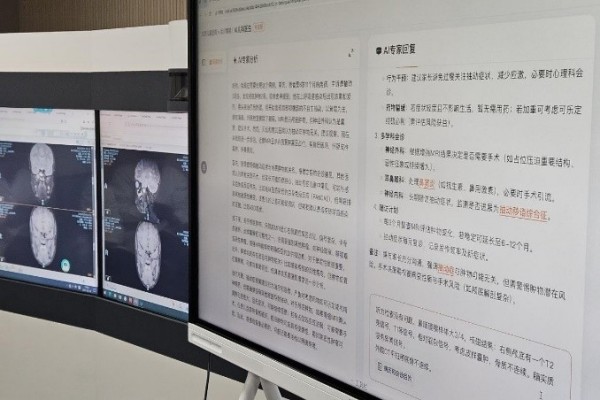
As specialists exchange views on diagnosis and treatment, the AI system analyzes the same clinical information in parallel, presents its clinical reasoning and offers evidence-informed recommendations. The final clinical decisions remain with the treating physicians, while the AI serves as another source of clinical insight during multidisciplinary discussions.
The consultation illustrates a challenge facing pediatric health systems around the world: how can specialist expertise reach every child who needs it, regardless of where that child receives care? For many families, however, access to specialist pediatric expertise still depends on where they live.
To help address this challenge, Beijing Children's Hospital, Capital Medical University, together with Baichuan AI and Xiaoerfang Health Technology, has developed China's first AI Pediatrician—a pediatric-specific clinical decision support system designed to support physicians in pediatric diagnosis and treatment.
The platform currently includes three versions tailored to different care settings. The Expert Version supports multidisciplinary consultations (MDTs) and the management of common, complex and rare pediatric diseases in tertiary hospitals. The Primary Care Version assists community health centers and county-level hospitals by providing standardized diagnostic guidance, referral recommendations and educational support for frontline pediatricians. The Family Version helps parents better understand children's symptoms, access reliable health information and make informed decisions about seeking medical care. Together, the three versions extend pediatric support from the home to primary care facilities and specialist children's hospitals.
Pediatric medicine presents unique diagnostic challenges. Young children often cannot clearly describe their symptoms, while the same disease may present differently across age groups. Accurate diagnosis therefore depends not only on medical knowledge, but also on careful history-taking, age-specific assessment and extensive clinical experience. These characteristics underscore the need for an AI system trained specifically on pediatric clinical reasoning.
Rather than functioning as a general-purpose AI chatbot, the AI Pediatrician has been purpose-built for pediatric medicine. It integrates decades of high-quality de-identified clinical data from Beijing Children's Hospital, authoritative clinical guidelines, expert consensus and pediatric medical literature. During development, more than 300 pediatric specialists worked closely with technical teams to translate years of clinical experience into structured clinical reasoning, enabling the AI system to learn not only medical knowledge, but also how experienced pediatricians approach diagnosis—from asking the right questions and interpreting clinical findings to considering differential diagnoses, treatment options and referral decisions.
The AI Pediatrician supports physicians throughout the clinical workflow, including history-taking, diagnostic analysis, treatment recommendations, referral guidance, medical documentation and health education. By providing structured, guideline-informed recommendations, it also helps promote more standardized pediatric diagnosis and treatment across different clinical settings. During internal evaluations conducted during development, the AI Pediatrician achieved a diagnostic accuracy of approximately 95%. While neither AI nor physicians can achieve perfect accuracy, licensed physicians remain responsible for all diagnoses, treatment decisions and prescriptions. Beyond supporting individual consultations, the AI Pediatrician also serves as a continuous learning resource, helping frontline pediatricians strengthen their diagnostic skills through everyday clinical practice.
According to Ni Xin, President of Beijing Children's Hospital and Director of the National Center for Children's Health, the AI Pediatrician is not intended to replace physicians, but to support doctors in making more comprehensive and standardized clinical decisions.
The AI Pediatrician builds on Beijing Children's Hospital's long-standing commitment to improving equitable access to high-quality pediatric care. As the National Center for Children's Health, the hospital has spent more than a decade strengthening pediatric services through national medical alliances, regional collaboration, specialist outreach and the development of a four-tier pediatric service network. The AI Pediatrician represents the next step in this ongoing effort, complementing existing collaborations by making specialist expertise more consistently available across different care settings. By supporting standardized diagnosis and timely referral, it is also intended to help children with common conditions receive care closer to home while facilitating referral when specialist care is needed.
As of June 2026, the AI Pediatrician had been introduced in more than 30 medical institutions across China. The platform supports recognition of more than 200 Chinese dialects, while multilingual versions, including English, Russian and French, are under development to support future international collaboration.
Looking ahead, Beijing Children's Hospital will continue to refine the AI Pediatrician through clinical validation, expert review and real-world application, while working with partners to support the development of standards and evaluation frameworks for AI-assisted pediatric care. According to Ni Xin, the long-term vision is to make high-quality pediatric expertise available wherever children receive care. He has described this ambition as creating "one million AI pediatricians"—not as a replacement for physicians, but as a way to support doctors, strengthen pediatric services across all levels of the health system, and help more children receive quality care closer to home.
Ultimately, the AI Pediatrician is more than a new digital tool. It represents a new approach to sharing pediatric expertise—helping specialist expertise travel farther than specialists themselves.
Previous: British Embassy Healthcare & Life Sciences Team Visits Beijing Children's Hospital
Next: New Standard Advances Integrated Care Model for Childhood Obesity Management
-
 KK Women's and Children's Hospital
-
 Meyer - Azienda Ospedaliero Universitaria
-
 Sickkids - hospital
-
 Wolfson Children's Hospital
-
 St. Jude Children's Research Hospital
-
 Children’s National Health System – Ranked top ten Best Children’s Hospitals
-
 Children's Hospital of Los Angeles
-
 Dana-Farber Cancer Institute - Cancer Treatment and Research in Boston, MA
-
 Boston Children's Hospital
-
 Fakultní nemocnice v Motole
-
 ФГБНУ “ИЭМ”
-
 Федеральное государственное автономное учреждение
-
 Pasteur
-
 Morgan Stanley Children's Hospital

Add: 56 South Lishi Road, Xicheng District Beijing
Zip code: 100045
Tel: +8610 59612345
Fax: +8610 59718700